
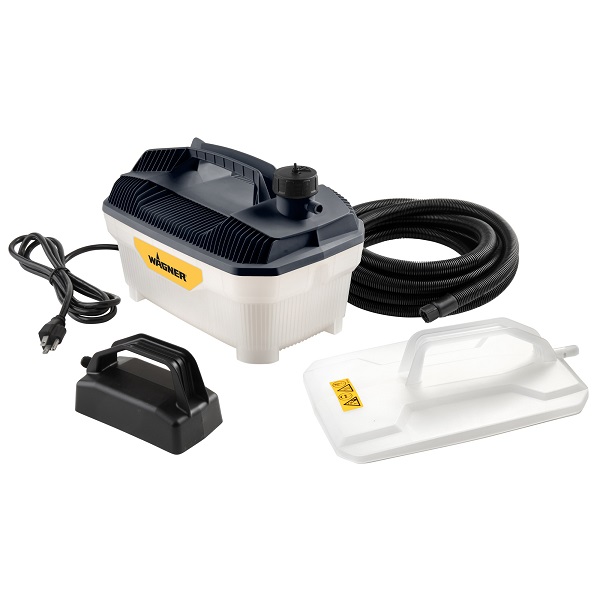
Your needs, this model
Does it fit your priorities?
Is wallpaper removal your required task?
The current 725 page and manual describe a dedicated wallpaper-steaming setup with two plate sizes.
Explore this need in the finder →Do you need a general padded-floor or small-detail attachment?
The 725 is documented as a wallpaper tool; its two plates do not establish a floor-pad or detail-brush package.
Explore this need in the finder →Does the manufacturer document a 12-foot hose?
Wagner’s FAQ gives a 12-foot hose; verify the exact model and condition of any seller package.
Explore this need in the finder →The Wagner 725 is best understood as a dedicated wallpaper-removal steamer, not a general floor-and-detail cleaner with a wallpaper accessory. Its reservoir, long hose and two steam plates are organized around softening wallpaper adhesive across broad and narrow wall sections. That focus is a real advantage for a stripping project and a poor fit if your required job is everyday floor mopping.
A tool built around large and small wall plates
Wagner’s exact product page identifies model 725 and lists a large 8 by 11 inch steam plate and a small 3 by 6 inch plate. The product description states up to two hours of steam from a fill. Wagner’s FAQ describes a 12-foot hose and about twelve minutes to make steam, while the instruction manual gives the operating and safety details. These are manufacturer claims, not measured outcomes; job time will also depend on wall covering, adhesive, room conditions and the pace of the operator.
The large plate is the reason this machine belongs in a wallpaper-specific comparison. It covers a broad area while held to the wall; the smaller plate is better suited to narrow spaces or edges. A reservoir and hose keep the hot steam plate away from the boiler body, but the plate and condensate remain hot. Wear appropriate eye and hand protection, keep the unit on a stable level surface and do not let the hose kink or pull the reservoir over.
Preparation is as important as the machine
Wagner’s instructions show scoring the paper before applying steam, then lifting softened material with a scraper. Follow the manual’s limits and keep the plate moving as directed; a steam plate is not a license to soak the wall or hold heat against one spot indefinitely. Test the wall covering and the wall underneath in a discreet area, especially where paint, plaster, seams or prior repairs may be vulnerable to moisture and heat. Protect nearby outlets and switches from water and steam, and never use the plate overhead without the maker’s stated precautions.
The 725 works best as a project tool: fill it with the exact manual’s permitted water, allow the documented warm-up, work a wall section, then stop and let components cool before handling or refilling. If your task involves grout, counters, upholstery, windows or a floor, choose a multipurpose canister or mop with an exact listed attachment for that surface. The 725’s wallpaper plates do not establish those other capabilities.
Capacity claims do not erase the refill routine
The manufacturer promotes a long run per fill, but the manual and support guidance control how much water to add, how the plate is handled and when the cap may be opened. Do not assume the nominal reservoir volume is usable capacity unless Wagner says so for the exact revision. Plan for a cooling pause before opening the vessel and follow the manual’s pressure-release sequence. An all-day stripping project can still be interrupted by a safe refill, a change of wall material or the need to protect adjacent finishes.
The source material uses “up to” figures for run time and does not promise a fixed square-foot output. I would not use the 120-minute claim as a guaranteed uninterrupted work period or use the hose length as a guaranteed radius around furniture. Route the cord and hose without trip hazards and keep the unit near a grounded outlet. If cord length, filled weight or exact refill time is a hard constraint, verify it in the manual or with Wagner rather than inferring it from a product image.
How it compares with the 715 and Earlex references
Wagner’s archived FAQ describes the 725 as a newer wallpaper tool and says its parts do not interchange with the 905e/915e/925e family. It also distinguishes the Earlex steam generator: Wagner describes that separate generator as the steam source for a woodworking steam box used to bend wood. The Earlex item is not a household steam-cleaner alternative. Older 705 and 715 references are also not interchangeable by parts; match the unit label before ordering any plate or hose.
Questionnaire fit and purchase checks
Choose “wallpaper removal,” the dedicated wallpaper-steamer format and a wallpaper-plate pass only if those are genuinely your required tasks. That combination should prefer the 725 over ordinary handhelds and floor mops, while a general “detail” choice should not accidentally promote it as an all-purpose home steamer. For a broad home routine, compare the attachments and water/refill steps of a multipurpose model instead. Wagner currently lists the 725 as a U.S. product, but check the exact model, package and instructions supplied by the seller; do not substitute an unverified 705 or 715 attachment simply because it looks similar.
Key details at a glance
| Machine arrangement | Wallpaper steamer |
|---|---|
| Nominal water capacity | 128 US fl oz |
| Documented hose length | 12 ft |
| Separate variable-flow control | No |
| Flow-adjustment location | No separate variable-flow dial |
| Pressure gauge | No |
| Lockable steam output | No |
| Refilling during use | No |
| Supplied tools and setups | Exact product page names large 8 x 11 in and small 3 x 6 in plates; the official FAQ states a 12 ft hose. |
| Water and care | Manual directs safe cooling before refill and protective handling; do not open hot equipment. |
| Exact configuration notes | Dedicated wallpaper-removal tool; check current package and exact safety instructions. |
Use the exact model’s instructions for operating limits, supplied equipment and version differences.
Paper, software and setup details
Manufacturer-stated STEAM-mode runtime (up to)
120 min
Sources for this assessment
Choose a steam cleaner for the actual job.
Match the supplied attachment and practical filling routine to your requirements.