
Your needs, this model
Does it fit your priorities?
Can this model select at least seven numbered steam-intensity levels?
Yes. The exact guide describes seven numbered levels, from 1 to 7, with 4 as the default. Higher settings release more moisture, so more choice does not mean every surface should use high output.
Explore this need in the finder →Can one kit switch between padded floors, detail cleaning and compatible fabrics?
Yes, in separate cooled attachment setups. The manual lists a mop/pad kit, jet/brush tools, and a fabric nozzle; it also warns against several heat-sensitive materials.
Explore this need in the finder →Does the original guide document an eight-foot hose or a refillable-while-running boiler?
No. This is a pole-and-handheld configuration without a measured separate hose, and the refill directions require stopping, disconnecting, cooling and releasing remaining pressure.
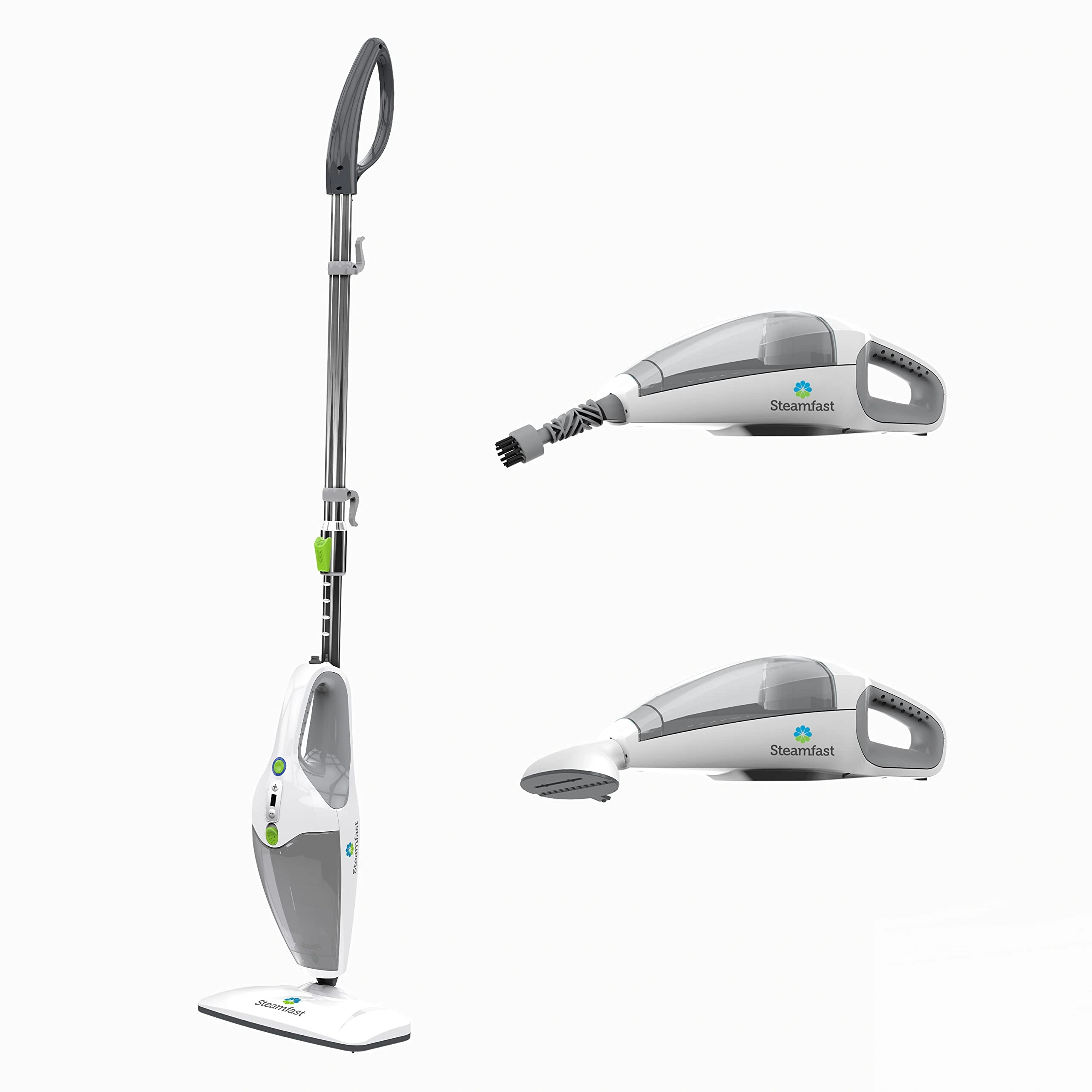
Explore this need in the finder →The Steamfast SF-295 puts a seven-step steam control on a compact mop body, then converts to handheld detail and fabric-steaming setups. Its manufacturer page now says the model is discontinued and no longer available, making this a practical owner reference rather than a recommendation to buy a used unit.
Its main advantage is seven numbered intensity levels
The SF-295 is a useful comparison with the earlier SF-294 because it replaces a simple LOW/HIGH rotary dial with a body-mounted LCD and plus/minus buttons. The guide specifies levels 1 through 7, with 4 as the default, and separates mop/fabric settings from handheld-cleaner use. More steps give an owner finer choices, especially when trying to control moisture; the manual explicitly says that higher settings increase the amount of moisture emitted. It does not mean that high is right for a delicate surface, or that a numbered level replaces a material maker's instructions.
Steamfast lists a 15-ounce reservoir and about 30 seconds to heat. Unlike the SF-294 manual, the SF-295 guide does not establish a runtime, a cord-length figure or a unit weight. Those measurements are intentionally left unknown here rather than borrowed from its near neighbor. Fifteen ounces is still a small working reservoir: it favors brief jobs and flexible attachment changes over long, uninterrupted floor sessions.
Three functions share a body, but not a working setup
The floor arrangement uses the extension pole, mop head and one of two microfiber pads. For small cleaning jobs, remove the pole and use the jet nozzle with the supplied nylon or brass utility brushes. For fabrics, connect the fabric nozzle; the included fabric brush attaches to it for loose hair and fibers. The manual also lists a squeegee, which is a separate glass setup. These tasks require changing attachments only after the hot unit has cooled. They should not be collapsed into an imaginary all-purpose pass.
This breadth is a real convenience if one stored appliance needs to cover permitted floors, fixtures and selected washable fabrics. It is not a substitute for a vacuum, carpet extractor or dedicated garment station. The microfiber pad is designed for hard-floor scuffs and stains, not to collect large amounts of loose dirt. The instructions recommend vacuuming first and acknowledge that some moisture may remain for air-drying.
More control does not remove material limits
The guide says not to use the SF-295 on unsealed hardwood or unglazed ceramic, cautions that heat and moisture can damage a floor, and notes that steam may affect waxed finishes. Consult the floor maker, test an inconspicuous area and keep the mop moving. It lists sealed hardwood and other specific floor types as possible settings, but that is not blanket approval for every finish or installation.
For fabric work, the exact guide excludes synthetic fabrics, velvet and other steam-sensitive material, and calls for a discreet test. It also excludes leather, wax and polished furniture or floors from steam cleaning. The brass brush is a separate abrasive-risk tool: even stainless steel can be scratched. For glass, steam first and use the squeegee as instructed, then wipe loosened soil. None of those specific tools supports broad disinfection, allergen or medical promises.
Expect cartridge and mineral-care work
Along with the brush and nozzles, the original guide lists a removable water-treatment cartridge. Steamfast recommends replacing it after 40 hours of use. That cartridge is not a reason to ignore scale: the same manual recommends monthly mineral-removal maintenance. Use water only in ordinary operation; distilled or demineralized water is strongly recommended, while the manufacturer's general FAQ says tap water may be used depending on hardness. Do not add cleaners to the reservoir.
Refilling is a pause, not a continuous-fill feature. The SF-295 manual says to disconnect the appliance, let it cool for 5–10 minutes, and hold the steam button to release all remaining pressure before removing the cap. For storage, it requires at least 30 minutes for complete cooling, an empty tank and no damp accessory left attached. Those are different stages of the safe routine; a button-controlled level or removable water tank is not permission to open a hot unit.
Choose the right comparison for an existing unit
The SF-294 offers the same broad mop/detail/fabric concept, a dial with LOW and HIGH, no documented water-treatment cartridge, and a shorter one-year warranty in its older manual. The SF-295 gives seven numbered levels and a two-year warranty in its owner guide, but the warranty terms in an old manual are not a promise of coverage on a used unit today. The accessory series also differs, so confirm the exact model before ordering any replacement head or brush.
Steamfast's exact SF-295 page now marks it discontinued and unavailable for purchase. If replacing rather than maintaining one, the McCulloch MC1275 supplies floor and detail tools in a canister format, while the MC1230 is a smaller handheld detail machine. Neither is the same detachable three-mode package. Existing SF-295 owners should check the condition of the cord, reservoir, cartridge, connectors and pads, then ask the manufacturer about exact parts rather than relying on a generic 3-in-1 label.
Key details at a glance
| Machine arrangement | Convertible mop body with handheld setups |
|---|---|
| Nominal water capacity | 15 US fl oz |
| Documented steam-intensity levels | 7 levels |
| Separate variable-flow control | Yes |
| Flow-adjustment location | On the machine body |
| Pressure gauge | No |
| Lockable steam output | No |
| Refilling during use | No |
| Controls and operation | Body-mounted LCD and plus/minus buttons select seven numbered intensity levels, 1–7, with level 4 as the default; the guide separates mop/fabric and handheld-cleaner use ranges. |
| Supplied tools and setups | The exact guide lists two microfiber pads; three utility brushes; jet nozzle; fabric nozzle; squeegee; fabric brush; and removable water-treatment cartridge. The pole and mop head form the floor setup; other attachments are distinct handheld configurations. |
| Water and care | Use water only. Steamfast strongly recommends distilled or demineralized water to limit mineral buildup; its current general FAQ says tap water may be used depending on hardness. The exact manual recommends replacing the removable water-treatment cartridge after 40 hours, and monthly mineral-removal maintenance. The manual says to stop, disconnect and allow 5–10 minutes of cooling, then press and hold the steam button to release remaining pressure before opening for a refill. For storage, allow at least 30 minutes for complete cooling, empty the tank and remove damp accessories. Do not use on unsealed hardwood, unglazed ceramic, synthetic fabrics, velvet, leather, waxed or polished surfaces, or other steam-sensitive materials; follow material-maker instructions and test an inconspicuous area. |
| Exact configuration notes | Manufacturer-marked discontinued and no longer available for purchase; retained as an owner/reference assessment, not a current buying recommendation. Runtime, unit weight and cord length are not established by the reviewed exact US guide or current product page. |
Use the exact model’s instructions for operating limits, supplied equipment and version differences.
Sources for this assessment
Choose a steam cleaner for the actual job.
Match the supplied attachment and practical filling routine to your requirements.